Overview
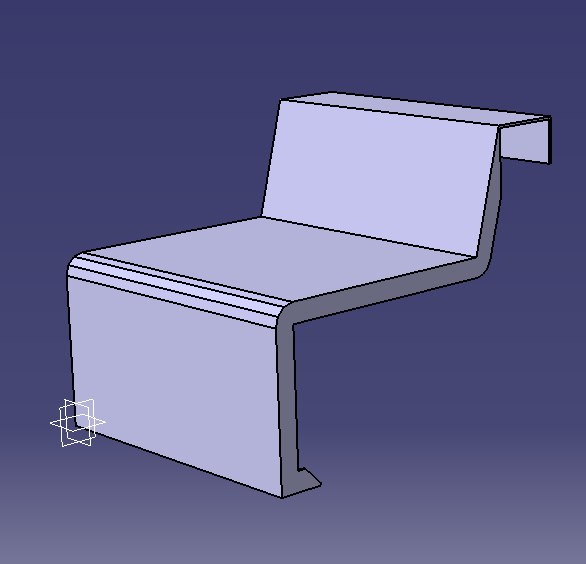
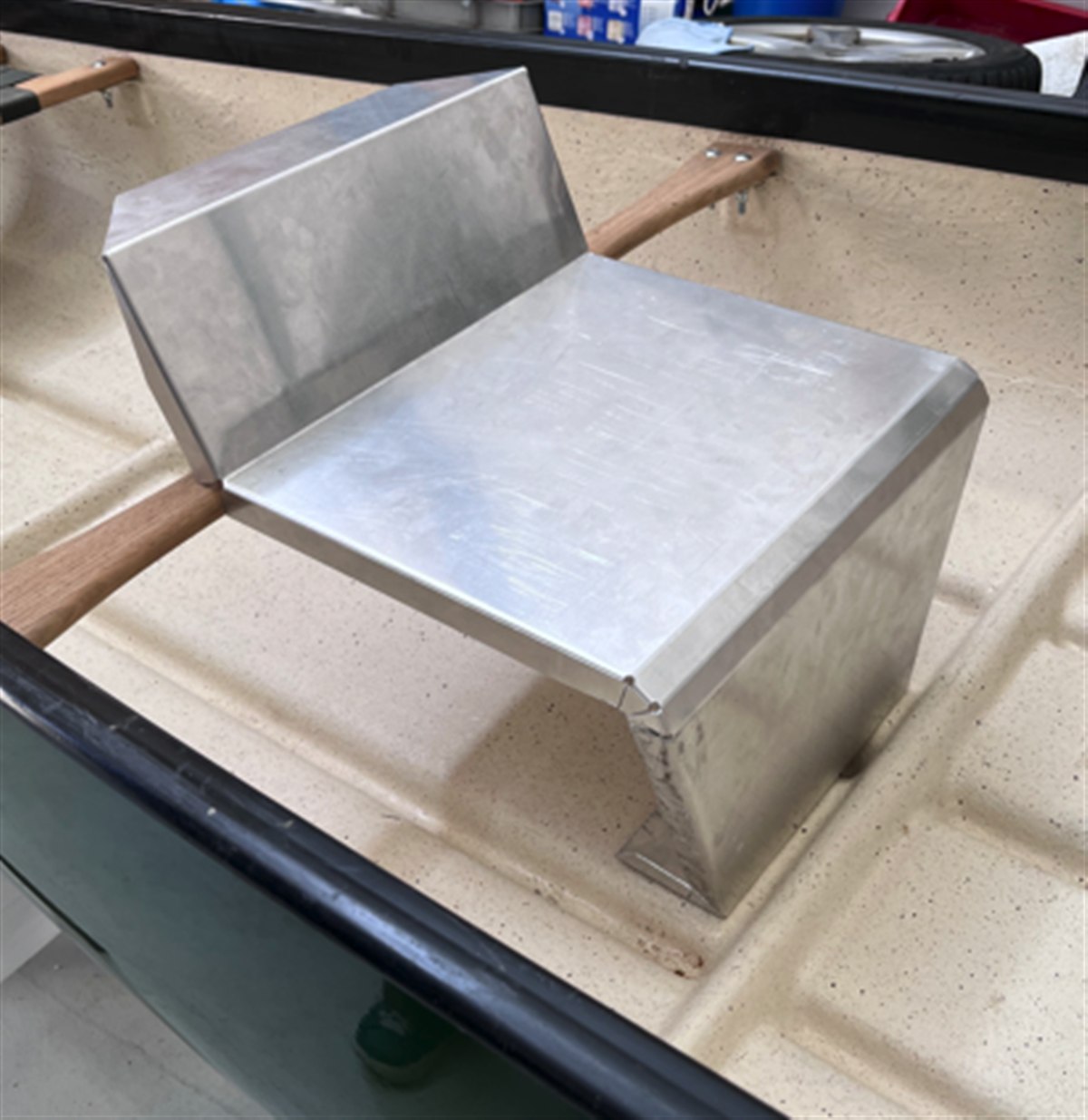
This project involved designing and fabricating a canoe-shaped stool from 2 mm aluminum sheet metal. The goal was to create a clean, elegant curved form that was visually lightweight yet structurally strong enough to support an adult. The work combined digital engineering tools with carefully executed manual fabrication, resulting in a functional and aesthetically refined piece.
Engineering Challenge
The project introduced several engineering and practical constraints that shaped the final design:
- Ensuring sufficient stiffness and strength using thin 2 mm aluminum
- Verifying load-bearing capacity before fabrication to avoid trial-and-error
- Translating complex curved geometry into manufacturable sheet-metal profiles
- Maintaining tight tolerances while working primarily with manual tools
- Achieving a visually clean, seamless finish despite the thin material and curved joints
These constraints guided both the modeling and the fabrication strategy.
Engineering Approach
CAD Modeling & Structural Validation (FEA):
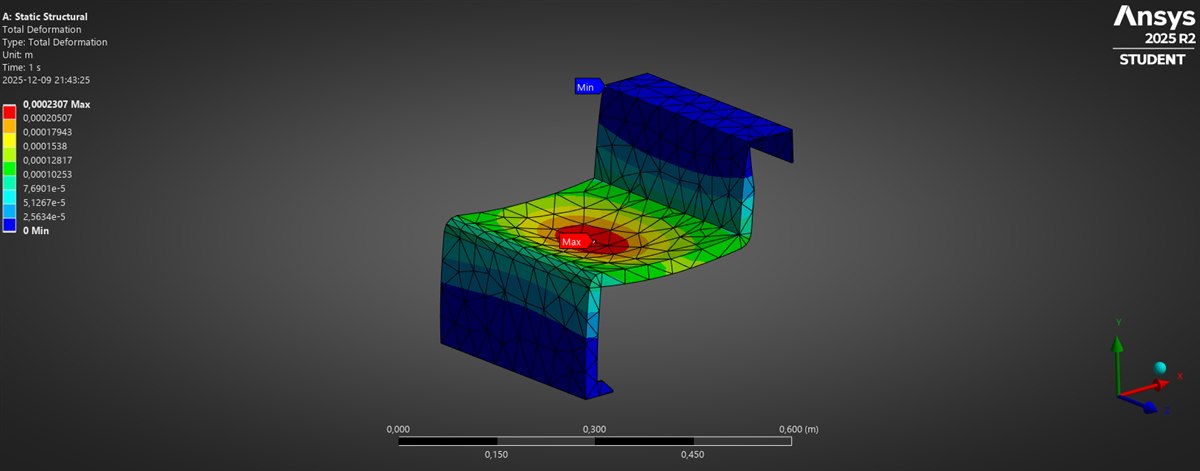
I began by developing a detailed 3D CAD model to fully define the curved canoe profile and explore how the form behaved structurally. Once the geometry was finalized, I ran Finite Element Analysis under a 1000 N load, representing the force of an adult sitting on the stool.
The analysis showed:
- Maximum deformation: 0.23 mm
- Maximum stress: 28 MPa
Both values were well within the acceptable limits for aluminum, confirming that the design provided a comfortable safety margin. This allowed the project to proceed into fabrication with confidence that the structure would perform as intended.
Precision Sheet-Metal Fabrication:
With the design validated, the next step was to translate the digital geometry into physical form.
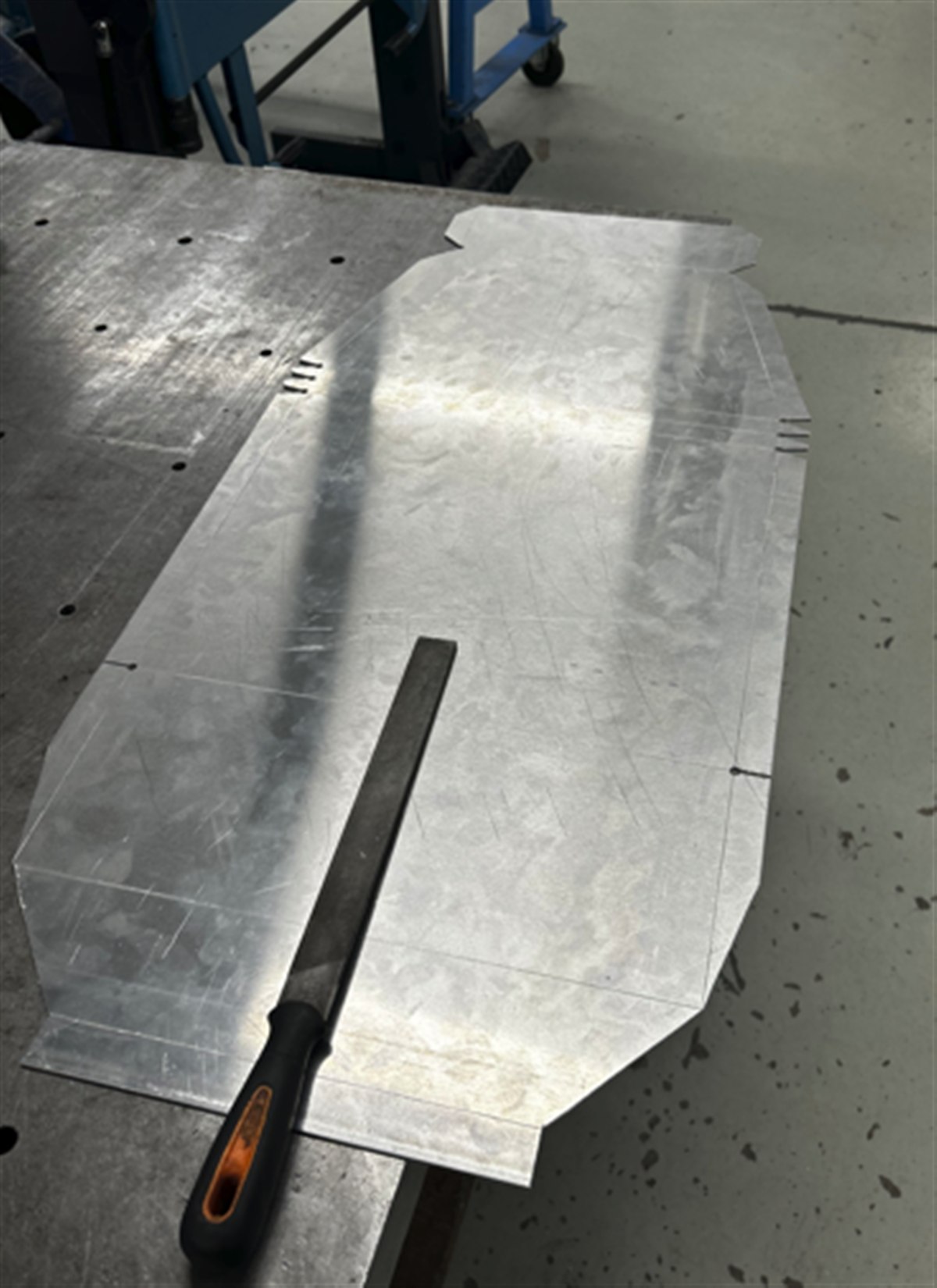
- The layout was carefully transferred to the 2 mm aluminum sheet using accurate angle measurements and manual tools.
- All curved profiles were cut on a bandsaw, then refined by hand with files to achieve smooth, precise edges.
- The joints were manually aligned and fitted to preserve the continuous curvature of the shape.
- TIG welding was used to create clean, strong seams without disrupting the overall form.
- Final forming and fine adjustments ensured that the finished stool matched both the CAD geometry and the structural intent of the design.
This phase emphasized precision and craftsmanship, as the thin material and curved profiles required steady control and attention to detail.
Result
The finished stool is lightweight, structurally solid, and visually refined. Real-world testing matched the predictions from FEA—the stool comfortably supports adult body weight with very minimal deflection.
The project demonstrates strong competency in:
- CAD modeling for sheet-metal applications
- Structural verification using FEA
- Manual metalworking techniques (cutting, filing, forming, TIG welding)
- A complete engineering workflow from digital concept to physical prototype
Overall, the project highlights the ability to blend computational analysis with hands-on fabrication to create a structurally optimized and visually clean product.