Project Overview
This project involved the complete structural restoration and precision rebuild of a damaged mountain bike rear wheel. The work encompassed spoke replacement, advanced wheel truing techniques, and quality verification through detailed inspection documentation.
Issue
The rear wheel experienced multiple impacts, resulting in several broken spokes that required replacement to restore structural integrity and safe operation. The wheel's geometry was compromised due to the spoke failures, making it unsafe for use.
Solution & Repair Process
The wheel was rebuilt using new spokes and nipples, maintaining the original lacing pattern. The rebuild process included:
- Disassembly and inspection of the wheel hub and rim
- Removal of damaged and broken spokes
- Installation of replacement spokes with proper lacing pattern preservation
- Installation of precision-grade nipples
- Careful tensioning and detensioning cycles to ensure even load distribution
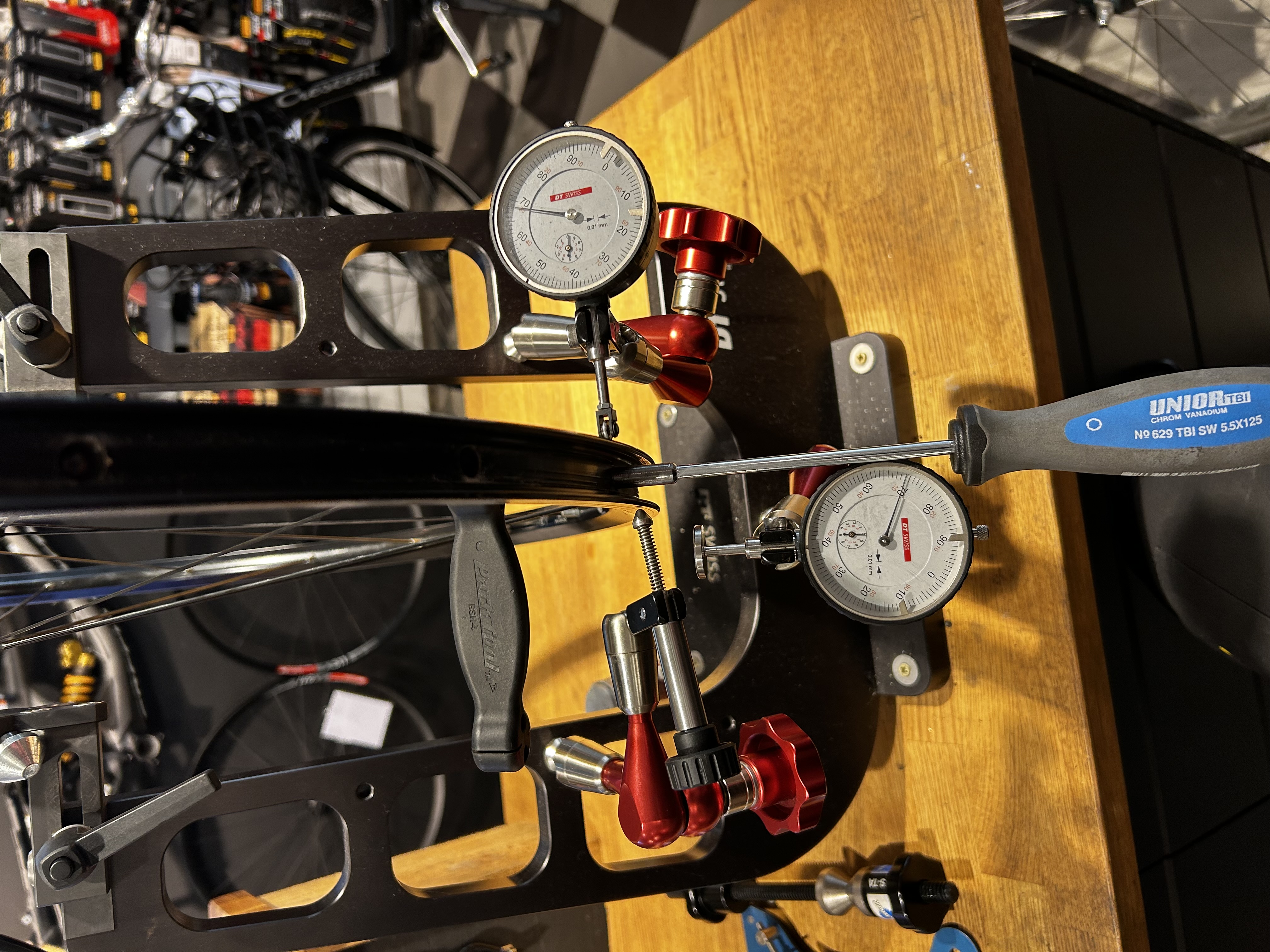
- Lateral truing to within 0.3 mm tolerance
- Radial truing to within 0.3 mm tolerance
- Application of Spoke Freeze compound to all nipples
- Final spoke tension verification and documentation
- Comprehensive inspection and quality assurance testing
Result
Complete structural restoration of the wheel to precise engineering specifications. The wheel was fully rebuilt with all spokes properly tensioned and balanced. An inspection report was conducted, documenting spoke tension in Newtons and confirming uniform load distribution. The wheel now exhibits reliable, consistent performance with lateral and radial deviations precisely maintained within 0.3 mm specifications.
Key Learnings
- Advanced wheel truing techniques and precision tolerance control
- Understanding spoke tension dynamics and load distribution principles
- Importance of systematic tensioning/detensioning cycles for even spoke load
- Application of stability compounds (Spoke Freeze) for long-term reliability
- Documentation and verification protocols for quality assurance
- Precision measurement techniques using wheel truing stands